
How to measure psychological safety in a team
Psychological safety explained: Edmondson's definition, her seven-item team scale, what Google's Project Aristotle found, and how to get honest answers.

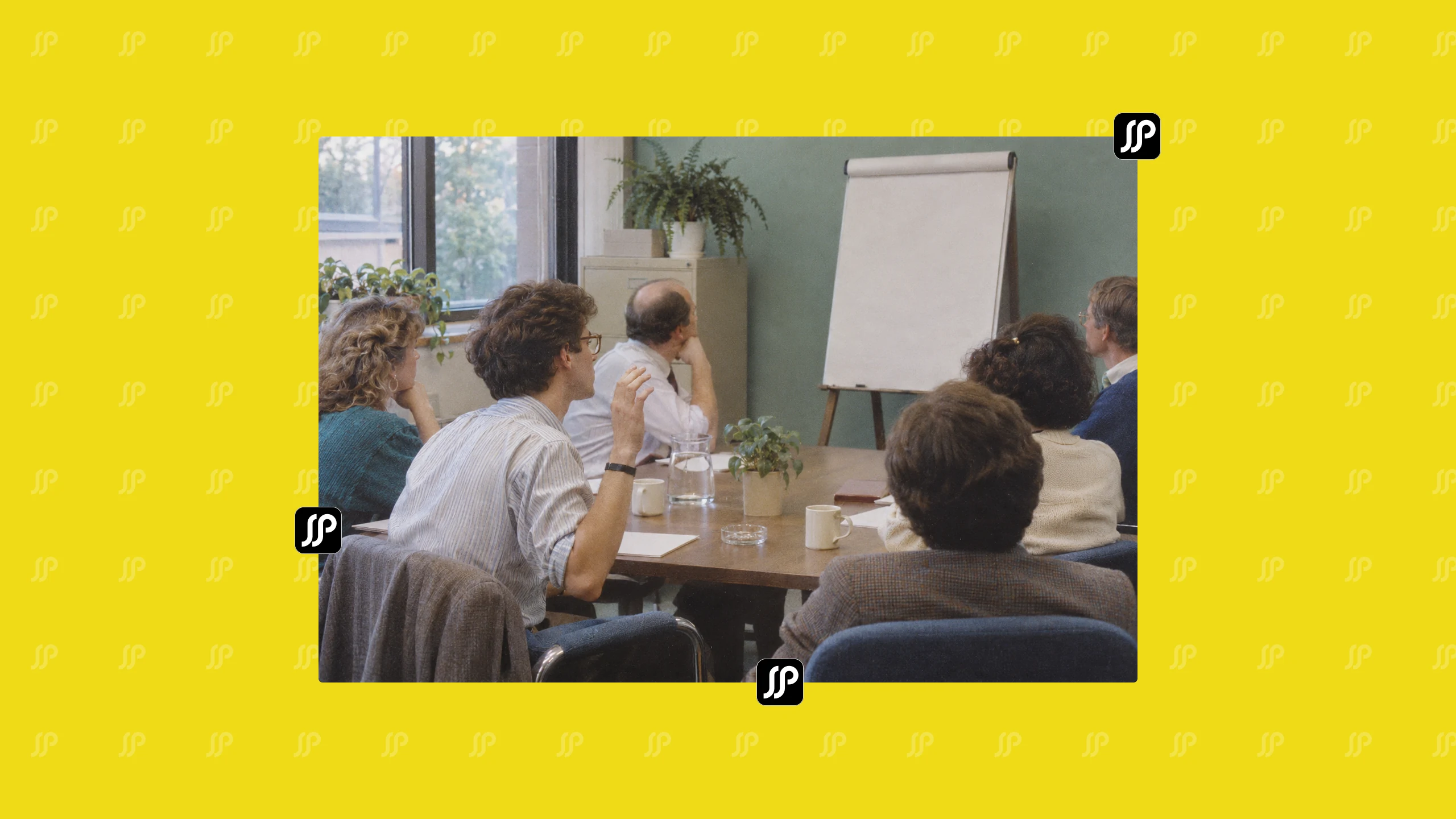
Psychological safety is a team’s shared belief that it is safe to take interpersonal risks: to admit a mistake, ask for help or disagree without being embarrassed or punished. The standard way to measure it is Amy Edmondson’s seven-item team scale from 1999, answered by every team member and averaged for the team. Because the people in the least safe teams are the least likely to answer honestly, pair the scale with confidential conversations that ask for real examples.
What is psychological safety?
The term comes from Amy Edmondson’s 1999 paper “Psychological Safety and Learning Behavior in Work Teams” in Administrative Science Quarterly. She defined team psychological safety as a shared belief among members that “the team is safe for interpersonal risk taking.” She was careful to separate it from cohesion. A close, friendly team can still be one where nobody challenges the leader. She also described it as mostly tacit: people rarely talk about it, they just act on it.
Two things in that definition matter for measurement. It is a property of the team, so you are looking for a view the members share. One person’s bad week is noise. And it is about risk: what people believe will happen if they speak up. You cannot see it directly, only in what people say and do.
Edmondson’s study covered 51 work teams in a manufacturing company. Psychological safety went with more learning behaviour, such as asking questions, seeking feedback and discussing errors, and learning behaviour in turn linked psychological safety to team performance.
What did Google’s Project Aristotle find about psychological safety?
Google researchers studied 180 teams, 115 project teams in engineering and 65 pods in sales, to find out what made some more effective than others. Its re:Work guide to team effectiveness reports that who was on the team mattered less than how the team worked together. It lists five dynamics in order of importance, with psychological safety first, followed by dependability, structure and clarity, meaning and impact.
The guide also lists things that were not significantly connected to team effectiveness at Google, including colocation, consensus decision-making, extroversion, individual performance, workload, seniority, team size and tenure. It adds that these may still matter elsewhere. For measurement, the guide refers readers to Edmondson’s seven-statement measure, which is one reason it is now so widely used.
How do you measure psychological safety in a team?
Edmondson’s scale has seven short statements about the team, each rated on a seven-point scale from very inaccurate to very accurate. The exact wording is in the appendix of the 1999 paper. In plain terms, they ask whether:
- mistakes tend to be held against the person who made them;
- members can raise problems and difficult issues;
- people are sometimes rejected for being different;
- taking a risk in the team feels safe;
- asking colleagues for help is difficult;
- anyone would deliberately undermine a colleague’s efforts;
- each person’s particular skills are valued and used.
Statements 1, 3 and 5 are negatively worded, so reverse their scores before averaging. Edmondson mixed positive and negative wording on purpose, to reduce the habit some people have of agreeing with every statement.
A few practical points when you use it:
- Report by team. A company-wide average hides exactly the teams you need to find.
- Look at the spread within a team as well as the average. A team where four people score high and two score very low has a problem the average conceals.
- Use the published wording. If you rephrase items to fit your house style, you lose comparability with the research and with your own past results.
- Repeat it. A single score is hard to interpret; the change after a reorganisation, a new manager or a difficult incident tells you much more.
Why is it hard to ask about psychological safety in an unsafe team?
Because the measure depends on the thing it measures. In a team where mistakes are held against people, telling the company that mistakes are held against people is itself a risk. People in that team will often give a safe middle answer, skip the survey, or score the team highly and hope nobody asks.
Small teams make it worse. Psychological safety is a team-level measure, and many real teams are small: a ward’s night shift, a depot’s planning office, a four-person finance team. If results are shown for a team of four, everyone in it can work out who gave the low score. Most survey tools solve this by hiding results below a minimum group size, which protects people but also hides the small teams where problems are often sharpest. Our post on the employee survey anonymity threshold covers how to set that limit.
Who asks also matters. A manager running a team discussion on psychological safety will get a different answer from an anonymous form. If the manager is part of the problem, the discussion will usually confirm that everything is fine.
Finally, a number cannot tell you what to do. A team scoring 4.1 on the risk-taking item could be reacting to a manager, a recent redundancy, a blame-heavy incident process or a single colleague. Each needs a different fix.
How do confidential one-on-one interviews help?
They give people a private place to describe what actually happens, and they ask for examples instead of ratings. Questions like these work well alongside the scale:
- Think of the last time you disagreed with a decision in your team. What did you do?
- When someone on your team makes a mistake, what usually happens next?
- Is there anything you have stopped raising at work? What made you stop?
- Who do you go to when you are stuck, and why that person?
- What would make it easier to speak up in your team?
Answers to questions like these are specific: “I raised the rota problem twice and was told to be a team player, so now I just swap shifts quietly.” That tells you where the risk is and what it costs, which a score cannot.
Spradley runs these as one-on-one AI interviews, by text or voice. People are invited by email or Slack and answer on their own phone or computer, in their own time, away from their manager and colleagues. The interviewer asks a follow-up question on each answer, so a short reply like “it depends” gets explored. Reports group what people said into themes with the quotes behind them, names and personal details are removed from the text, and numbers and ratings are never shown for fewer than five people. You can compare departments without exposing anyone. Our page for HR teams explains how it fits an existing listening programme.
Psychological safety also shapes whether other changes land. Teams that do not feel safe will not tell you a new system is failing or that a reorganisation is not working, which is why it is worth checking before a large change, as we describe in our guide to change readiness survey questions.
Frequently asked questions
What is the definition of psychological safety?
Amy Edmondson defined team psychological safety in 1999 as a shared belief among team members that the team is safe for interpersonal risk taking, such as admitting mistakes, asking for help or disagreeing.
How many items are in Edmondson's psychological safety scale?
Seven. In the 1999 paper each statement was rated on a seven-point scale from very inaccurate to very accurate, and three negatively worded items are reverse-scored.
What did Google's Project Aristotle find?
Google studied 180 teams and found that how a team worked together mattered more than who was on it. Psychological safety was the first of five dynamics, followed by dependability, structure and clarity, meaning and impact.
Can you measure psychological safety with a survey alone?
A survey gives you a comparable score by team, but people in unsafe teams are the least likely to answer honestly, and the score does not explain the cause. Confidential interviews that ask for real examples fill that gap.
Key terms
- psychological safety
- A team’s shared belief that it is safe to take interpersonal risks, such as admitting a mistake, asking for help or disagreeing. Amy Edmondson defined and measured it in 1999.
- team psychological safety scale
- Amy Edmondson’s seven-statement measure from 1999, each rated on a seven-point scale and averaged for the team. Three statements are negatively worded and reverse-scored.
- Project Aristotle
- Google research on 180 teams that found how a team worked together mattered more than who was on it. Psychological safety came first of the five dynamics it identified.
- minimum group size
- The smallest number of responses a group needs before its results are shown. Five is a common default; smaller groups are hidden or combined with a larger one.
- AI-moderated interview
- A one-on-one conversation run by software, in which the interviewer asks open questions and a follow-up question based on each answer. Everyone invited can take part at the same time.