How to survey factory floor workers on every shift
Operators have no desk, work rotating shifts and rarely trust a survey. The channels manufacturers use, their trade-offs, and how to close the loop.

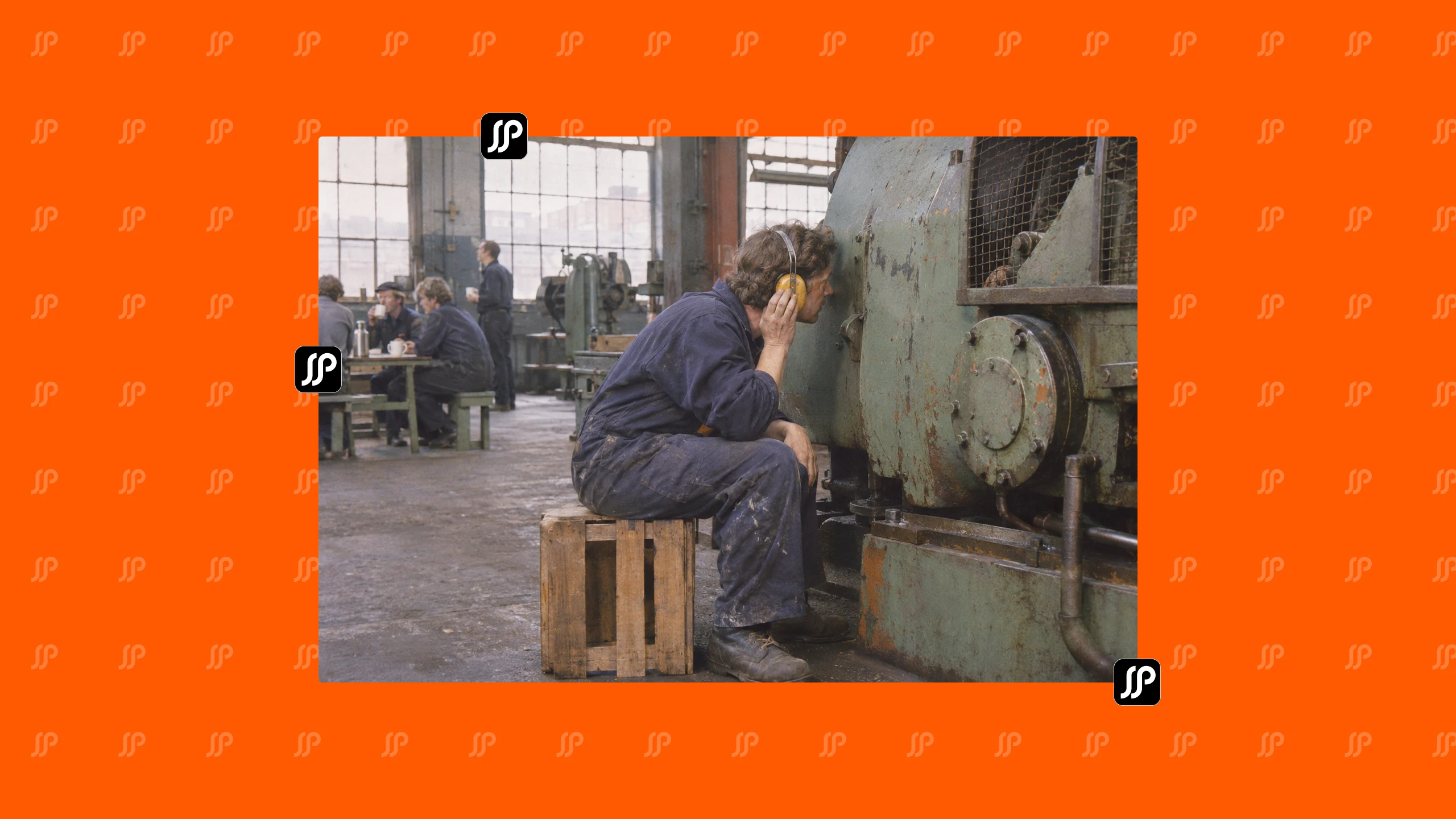
Manufacturers survey factory floor workers by going to where the operators are: paper forms at shift change, kiosks or QR codes in the break room, a link on their own phone, or questions asked in the team huddle. The method matters less than three decisions around it. Give people paid time to answer, cover every shift, and show them what changed because of what they said.
Low response on production sites usually comes from treating operators like office staff. An email survey with a two-week window works for people who sit at a laptop. It does very little for someone who starts at 06:00, has no company email, and spends a 20-minute break in a canteen with poor signal.
Why is it hard to survey factory floor workers?
Four things get in the way on almost every site.
Shift patterns
A plant running three shifts is really three workplaces. The night shift has fewer managers on site, often no setter or maintenance cover, and a different set of problems. A survey launched on Monday morning and promoted in the day-shift huddle describes the day shift. Plan the window so every rotation gets at least one full cycle of shifts to answer, and ask each shift supervisor to raise it at their own briefing.
No desk and no work email
Many operators have no computer and no company email address. Some have a personal phone on them all day; others have to leave it in a locker on the line for safety or hygiene reasons. Find out which applies to each area before you pick a channel. A food plant with strict hygiene zones and a machine shop with phones allowed in pockets need different plans.
Languages on the line
Many production sites run with several first languages on one line. A survey in the site’s business language only will under-represent the people who find it hardest to read, and they are often the agency staff and newer starters whose view you most need. Translate the questions properly, test them with a few operators, and check which languages your tool can actually handle before you promise anything on the noticeboard.
Trust in supervisors
On the floor, the supervisor controls overtime, holiday and who gets the better line. If the survey is handed out by that supervisor, collected by that supervisor, or reported back at team level where five people can guess who wrote what, honest answers dry up. The CIPD notes in its employee voice factsheet (2026) that people stay silent when they judge the risk of speaking up to be higher than the benefit. On a production line, that judgement is made fast.
How much time should operators get to answer?
Let them answer in paid time, and say so in writing. If the only time to respond is an unpaid break, you are asking people to give up the one rest they get in an eight-hour shift. Book 10 to 15 minutes per person into the shift plan, cover the line while people answer, and make sure team leaders know it is expected. That costs production minutes. It is also the clearest signal that management wants the answers.
Which channels do manufacturers use, and what are the trade-offs?
No single channel reaches every operator. The CIPD’s guidance on voice makes the same point: one initiative on its own rarely covers everyone, and the channels need to work together.
Paper forms
Paper works for people with no phone and no email, and it is familiar. The cost comes later. Someone has to collect, type up and translate the forms, free-text answers get skipped or misread, and a stack of handwritten forms on a supervisor’s desk does not feel confidential to the person who filled one in.
Kiosks and shared tablets
A kiosk in the canteen gives everyone a screen without needing a personal device. In practice it tends to reach the same people each time, those who pass it on a quiet break. A shared screen in a busy room is also a poor place to type something critical about your manager.
QR codes on posters
A QR code on the noticeboard or on payslips is cheap and quick to set up. It depends on people having a phone on them and the code being easy to find. Because the link is shared, you usually cannot see which shifts or areas have answered until the survey closes, and the code can be passed around outside the site.
A personal link on their own phone
A link sent to each person lets them answer privately, at a moment that suits them, and lets you track coverage by area while the survey is open. The catch is the address list. You need an email address or messaging account for every operator, and many plants do not hold one.
Questions in the team huddle
The start-of-shift huddle already happens every day, so it reaches everyone on that shift. It is good for short, practical questions about the work. It is the worst place to ask about the supervisor running it, and the answers only exist in someone’s notes.
Most sites end up combining two or three of these. A typical mix is a personal link for everyone who can receive one, paper or a supervised session for those who cannot, and the huddle to remind people and later to report back.
What should you ask operators?
Ask about the work first. Operators answer questions about their last shift far more readily than questions about “engagement”. Keep each question to one thing and in plain words.
- Walk me through your last shift. Where did the line stop, and why?
- What do you fix yourself that shouldn’t need fixing?
- When something unsafe happens, what do you do, and what happens next?
- How do you hear about changes to the line or the plan?
- What does a good shift look like for you?
- If you could change one thing on your line, what would it be?
Questions like these turn up the near misses, missing tools and handover gaps that never reach a report. For more on using them in improvement work, read our guide to gemba walks, kaizen and ideas from employees.
Does listening to factory workers make a difference?
There is evidence that it goes with better performance. A study of US manufacturing plants by Nathan Wilmers and Dylan Nelson, reported by MIT Sloan (2025), found that plants which used input from production workers in their decisions saw 16% higher productivity, measured as revenue per worker, than comparable plants that did not. It is a comparison between plants, so it shows an association. It does not prove that running a survey will raise your output.
Safety bodies make a similar case for involving workers from the start. NIOSH’s Fundamentals of Total Worker Health Approaches (2016) asks employers to involve the workers in daily operations in identifying safety and health issues, and to develop surveys together with them. On a plant, that can be as simple as testing your questions with two operators from each shift before launch.
How do you close the loop with the factory floor?
Operators judge the next survey by what happened after the last one. Gallup (2023) advises having a plan to communicate and act before collecting any input. On a plant, that plan can be short.
- Report back on every shift within a few weeks, in the huddle and on the noticeboard, in the languages people use on the line.
- Name two or three things you will change, who owns each one, and when people will see it.
- Say plainly what you will not change and why. Operators respect a clear no more than silence.
- Return to the same topics next round and ask whether the changes worked.
Where does Spradley fit?
Spradley runs one-on-one AI interviews instead of a form. Each operator gets a personal link by email or Slack and answers on their own phone, by voice or text. The interviewer asks a follow-up on each answer, so “the changeover is a mess” turns into which changeover, on which shift, and what goes wrong. The report groups answers into themes with the quotes behind them, and you can compare lines, shifts or sites, with numbers and ratings never shown for fewer than five people.
Be clear about the limit. Spradley has no SMS, kiosk or QR code option, so every operator needs a work email address or a Slack account, or the employer has to provide one. Where that is not possible, keep paper or a supervised session for those people. You can see how it works for plants on our manufacturing page, and our guide to feedback from frontline shift workers covers the same problem in other sectors.
Frequently asked questions
How do manufacturers survey factory floor workers?
Usually with a mix of channels: paper forms, kiosks or QR codes in break rooms, a personal link on their own phone, and questions in team huddles. The sites with the best coverage also give paid time to answer and report back on every shift.
Should operators answer surveys in paid time?
Yes. Asking people to answer in an unpaid break signals that the survey matters less than the line. Book 10 to 15 minutes into the shift plan and cover the line while people answer.
How do you reach night shift workers?
Keep the survey open long enough for every rotation to work a full cycle of shifts, and ask the night shift supervisor to raise it at their own briefing. Report the results back on the night shift too.
Can Spradley reach operators without a work email?
Only if they have a Slack account or the employer gives them an email address. Spradley sends invitations by email or Slack and has no SMS, kiosk or QR code option.
Key terms
- deskless worker
- An employee who does not work at a desk or computer, such as a nurse, driver, machine operator or store assistant. Many have no company email address.
- rota cycle
- The full sequence of shifts in a rota before it repeats. Keeping a survey open for a whole cycle gives every shift pattern a chance to answer.
- huddle
- A short stand-up meeting, usually ten minutes or less at the start of a day or shift, where a team looks back at performance and flags concerns.
- near miss
- An incident that could have caused harm or damage but did not. Near misses rarely reach a report unless people are asked.
- minimum group size
- The smallest number of responses a group needs before its results are shown. Five is a common default; smaller groups are hidden or combined with a larger one.
- AI-moderated interview
- A one-on-one conversation run by software, in which the interviewer asks open questions and a follow-up question based on each answer. Everyone invited can take part at the same time.